Trending

You've matched the hook and yarn, read the pattern twice, and then you hit it: dc in next 6 sts. In a British pattern that gives you a neat, close fabric. In an American one the same instruction builds something taller and lacier altogether. The stitches aren't the problem. The names are.
It is the most common reason a project comes out the wrong size, and it has nothing to do with your tension. Once you know the trick, it becomes a five-second check instead of an evening of unpicking.
For every stitch that has a name in both systems, the UK name sits one step higher than the US name for the identical stitch. Same height, same construction, same fabric, different label.
The shortest working stitch — the firm, dense one you build amigurumi and dishcloths from — is double crochet in the UK and single crochet in the US. The two naming traditions grew up separately on either side of the Atlantic, each perfectly consistent on its own terms, and both stuck.
What that means in practice: follow a US pattern using UK names and every stitch comes out a step too tall. Work a whole blanket that way and the fabric grows looser than the pattern intends, the shaping stops lining up, and the finished piece can be several centimetres out. Going the other way gives you a cramped, stiff fabric that doesn't drape as the photo promises.
A few millimetres per stitch is invisible on row two. By row 150 it is the difference between a scarf and a collar — and because taller stitches eat more yarn, your yardage estimate drifts too. Hat crowns end up too shallow, sleeves sit too low, and granny squares refuse to lie flat next to the ones you made from a different pattern.
Abbreviations vary slightly between publishers. The relationships never do. Copy this out or photograph it for your project bag.
Read down that list and the pattern is plain: UK names are US names plus one, all the way up. No stitch breaks the rule, and there is no gap where a stitch exists in one system but not the other. Slip stitch and chain share their names simply because there was nothing to count differently.
Before you work a single stitch, scan the page. Most patterns announce themselves in the first few lines, and a handful of clues will settle it:
If it's still ambiguous, find a row that shapes a corner and count. A pattern that tells you to tr into a chain space and produces a tall, lacy stitch is UK. One that says dc and does the same thing is US.
Seeing a full row written both ways is the fastest way to make the shift stick. Here's a simple shell row:
Notice that the structure never moves. Every tr becomes a dc, every dc becomes an sc, and every miss becomes a skip. If you can rewrite one row, you can rewrite a whole pattern — and if you'd rather not, you can simply read it and convert in your head as you go.
Two mental tricks make head-conversion almost automatic.
The first is the promotion rule: British stitches always sit one rank above their American twins. When a US pattern asks for a single crochet, you are working what a British designer would call a double. Restate it that way in your head and your hands follow without hesitation.
The second is to ignore names altogether and count the yarn overs. Ask yourself how many times the hook passes through two loops:
Counting loops feels slower at first, but it never lies, and it works for every stitch in every pattern — including the ones with no shared abbreviation at all.
If you regularly work from both UK and US sources, learn to read symbol charts and the whole problem evaporates. Crochet symbols are drawn, not named, so a tall two-yarn-over stitch means the same thing in Manchester as it does in Michigan. The only wrinkle is that chart conventions aren't quite as universal as the stitches themselves — some publishers draw a half double crochet as a plain T, others add a bar — so check the key once before you start. After that, you can work a Japanese, British or American chart without translating a single word.
Spotting the mix-up on row 40 is a rite of passage. You have three options, roughly in order of effort:
What you shouldn't do is switch systems halfway. Mixing one system's dc with the other system's dc in a single piece gives you a stepped, uneven fabric that reads as a mistake no matter how neat your stitches are.
Pick a system at the start of a project, write it on a sticky note, and pin the note to your work. Two seconds of admin saves an evening of unpicking.
Once the one-step rule is in your head, the UK-versus-US question stops being a trap and becomes a reflex. You'll spot the spelling, do the arithmetic, and get on with the crochet — which was the point all along. And if you ever forget, remember the shortest stitch: single in America, double in Britain, and everything else follows from there.
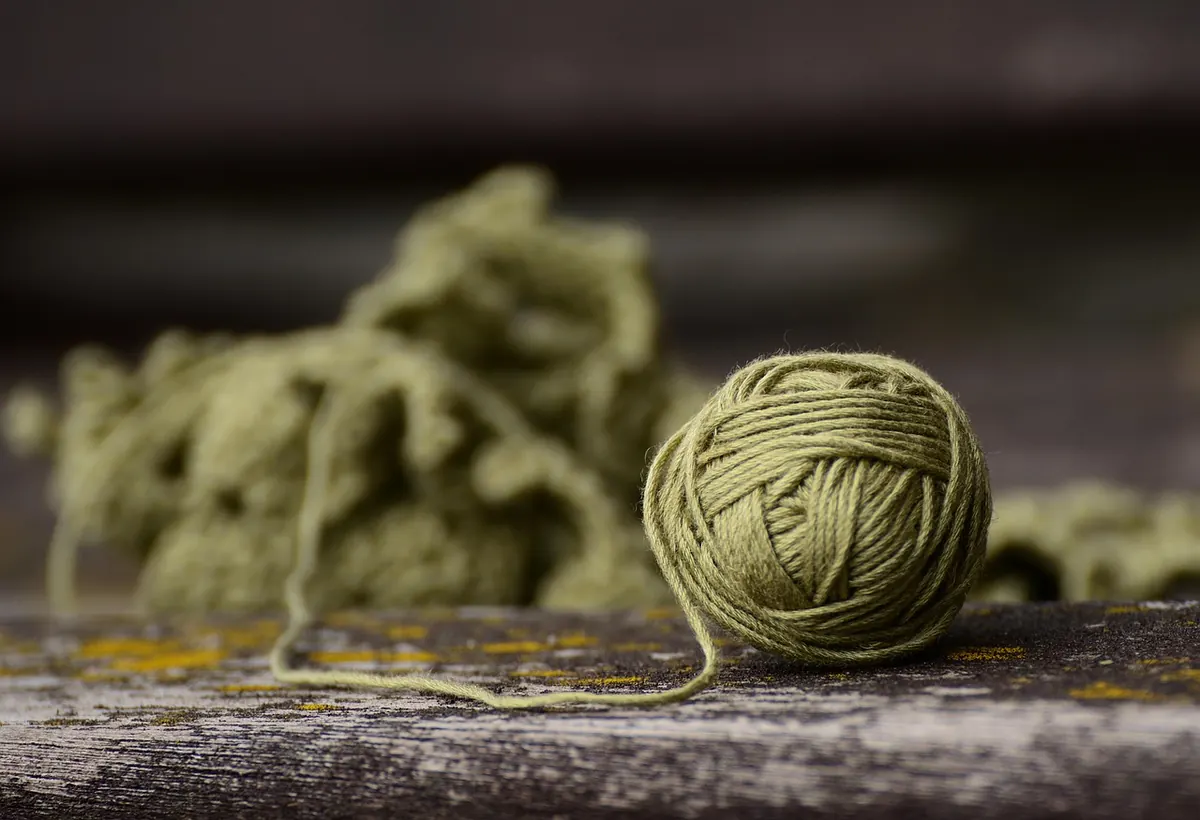
Photo: congerdesign / Pixabay